ACE Uganda Hosts ABI Bioinformatics Summer School 2026

Elizabeth Basemera
Communications Assistant
The two-week intensive training programme, which runs from 17th to 28th August 2026, has brought together 30 researchers from across the African continent for hands-on training in practical bioinformatics skills essential for genomic research.
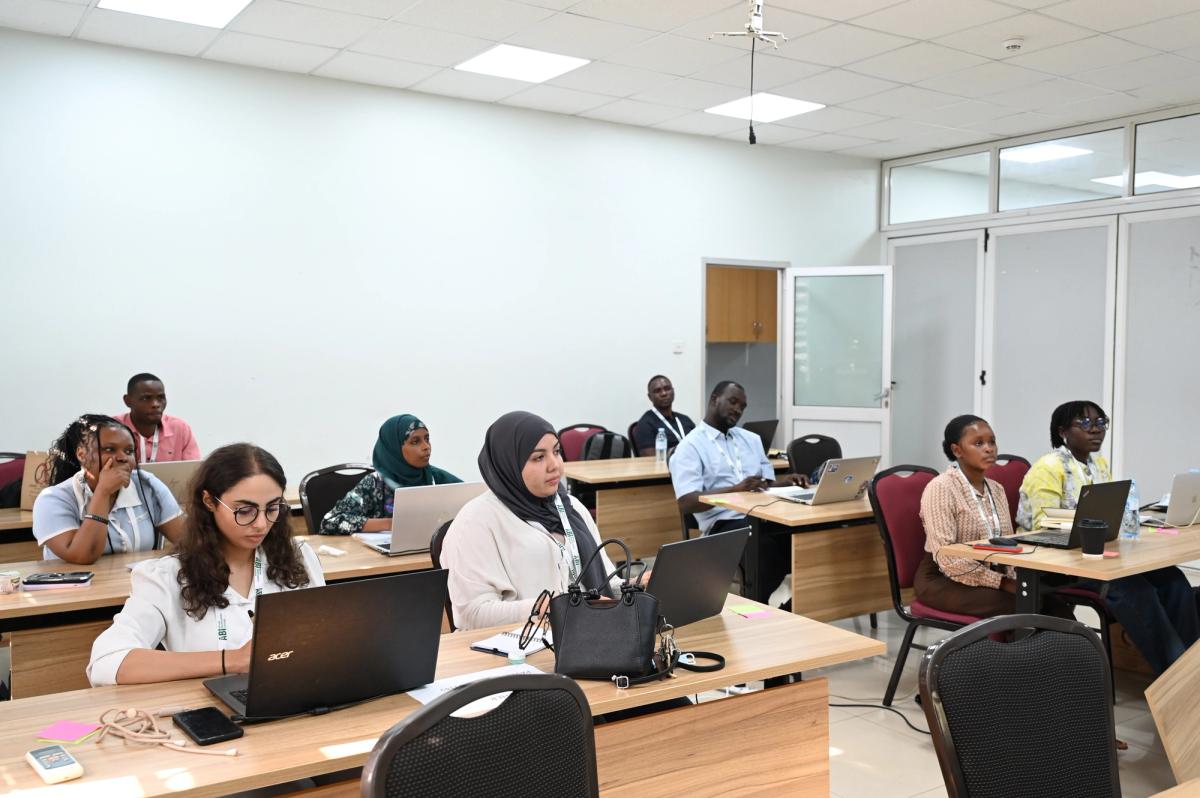
The African Bioinformatics Institute (ABI), in partnership with the African Center of Excellence in Bioinformatics and Data Intensive Sciences (ACE-Uganda), the Uganda Virus Research Institute (UVRI), and the MRC/UVRI & LSHTM Uganda Research Unit, is currently hosting the ABI Bioinformatics Summer School at the Infectious Diseases Institute (IDI), Makerere University.
The two-week intensive training programme, which runs from 17th to 28th August 2026, has brought together 30 researchers from across the African continent for hands-on training in practical bioinformatics skills essential for genomic research.
During the first week, participants built foundational competencies in Linux, high-performance computing (HPC) environments, R programming, and next-generation sequencing workflows. These core skills are essential for researchers working with large-scale genomic datasets that bolster modern public health research.
The second week has seen participants divide into three parallel specialised tracks, allowing them to dive deeper into areas directly relevant to their research interests:
Human Genomics
Guided by Dr. David Twesigomwe of the MRC/UVRI & LSHTM Uganda Research Unit and Dr. Musasula Sinkala of the University of Cape Town, participants are exploring human genetic variation and its implications for health and disease.
Pathogen Genomics
Led by Shahiiid Kiyaga and Patricia Nabisubi from ACE-Uganda, this track focuses on the genomic surveillance of infectious diseases, equipping researchers with tools to track outbreaks and understand pathogen evolution.
Metagenomics
Facilitated by Ephifania Geza (University of Cape Town) and Alfred Ssekagiri (Uganda Virus Research Institute), participants are learning to analyse complex microbial communities and their role in health and disease.
All training is delivered in an HPC-enabled environment, leveraging ACE-Uganda's state-of-the-art computing infrastructure to give participants experience with the computational resources required for cutting-edge genomic analysis.
The summer school represents a significant investment by providing free, in-person training to selected participants, the programme removes financial barriers and ensures that talented researchers from across the continent can access world-class bioinformatics education. The partnership between ABI, ACE-Uganda, UVRI, and the MRC/UVRI & LSHTM Uganda Research Unit creates a rich learning environment that connects participants with experienced trainers and peers from across the continent.
As the summer school enters its final days, participants are applying their newly acquired skills to real-world genomic datasets, working on projects that reflect the health challenges facing African communities. The programme culminates in participant presentations, showcasing the analyses they have conducted and the insights they have generated.
The ABI Bioinformatics Summer School is a powerful example of capacity building in action; equipping researchers with the skills they need to lead genomic research on the continent and contribute to solving some of Africa's most pressing health challenges.

Elizabeth Basemera
Communications Assistant
Elizabeth Basemera is a Communications professional at the African Centre of Excellence (ACE) in Bioinformatics and Data-Intensive Sciences. Here, she leads strategic communications, digital engagement, and science storytelling to promote the Centre's research, training programmes, and partnerships. Her work focuses on making complex scientific research accessible to diverse audiences while strengthening ACE's visibility and impact across Africa. She is passionate about effective storytelling and how it can strengthen research impact, foster collaboration and inspire the next generation.