ACE-Uganda Hosts Milestone AI & AMR Symposium 2026

Elizabeth Basemera
Communications Assistant
Over two days, researchers, policymakers, students, and global health leaders from over 17 institutions and 10 countries, gathered to explore one of the most urgent questions in modern medicine: How can AI help us stay ahead of the growing threat of antimicrobial resistance?
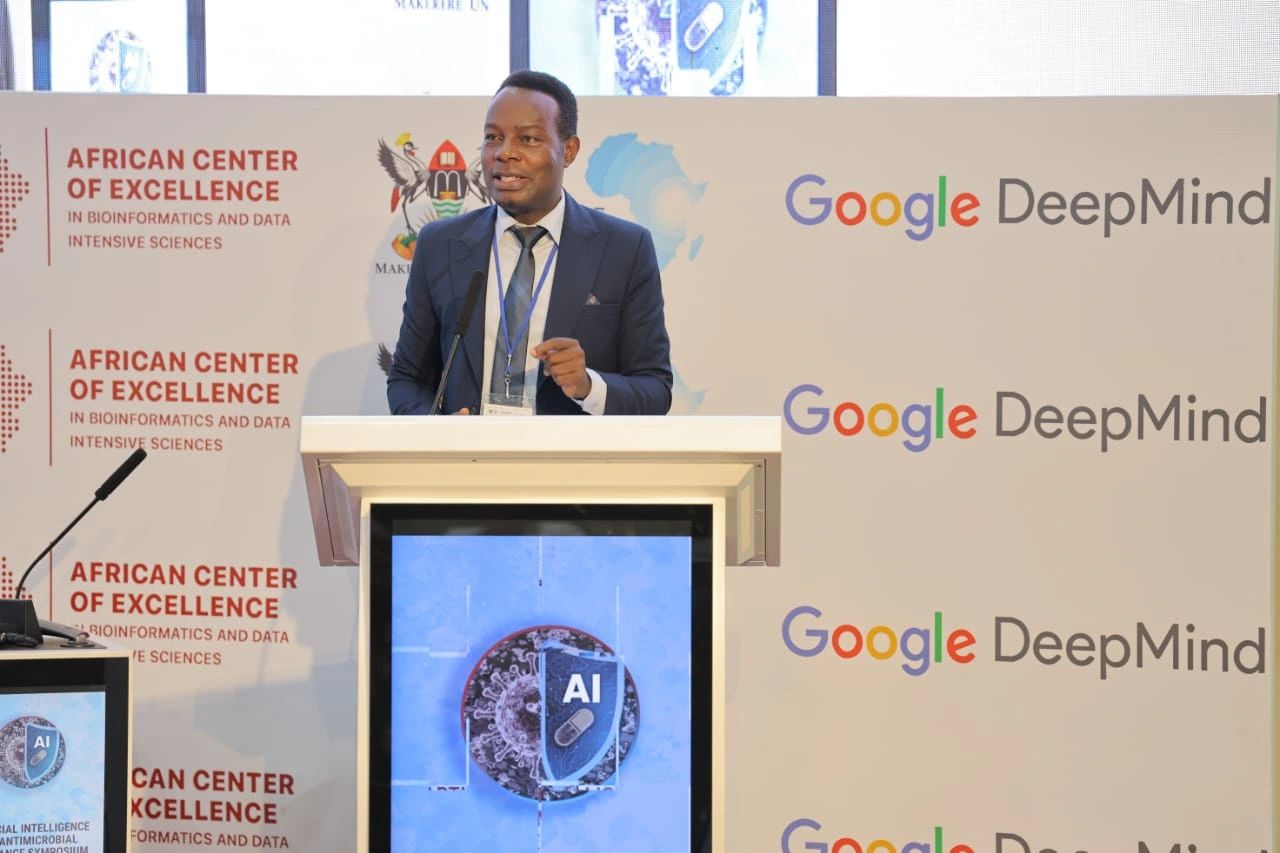
The African Center of Excellence in Bioinformatics & Data Intensive Sciences-Uganda (ACE-Uganda), in partnership with Google DeepMind and the Infectious Diseases Institute (IDI), successfully hosted the Artificial Intelligence and Antimicrobial Resistance (AMR) Symposium 2026 at the Makerere University School of Public Health (MakSPH) auditorium. Over two days, researchers, policymakers, students, and global health leaders from over 17 institutions and 10 countries, gathered to explore one of the most urgent questions in modern medicine: How can AI help us stay ahead of the growing threat of antimicrobial resistance?
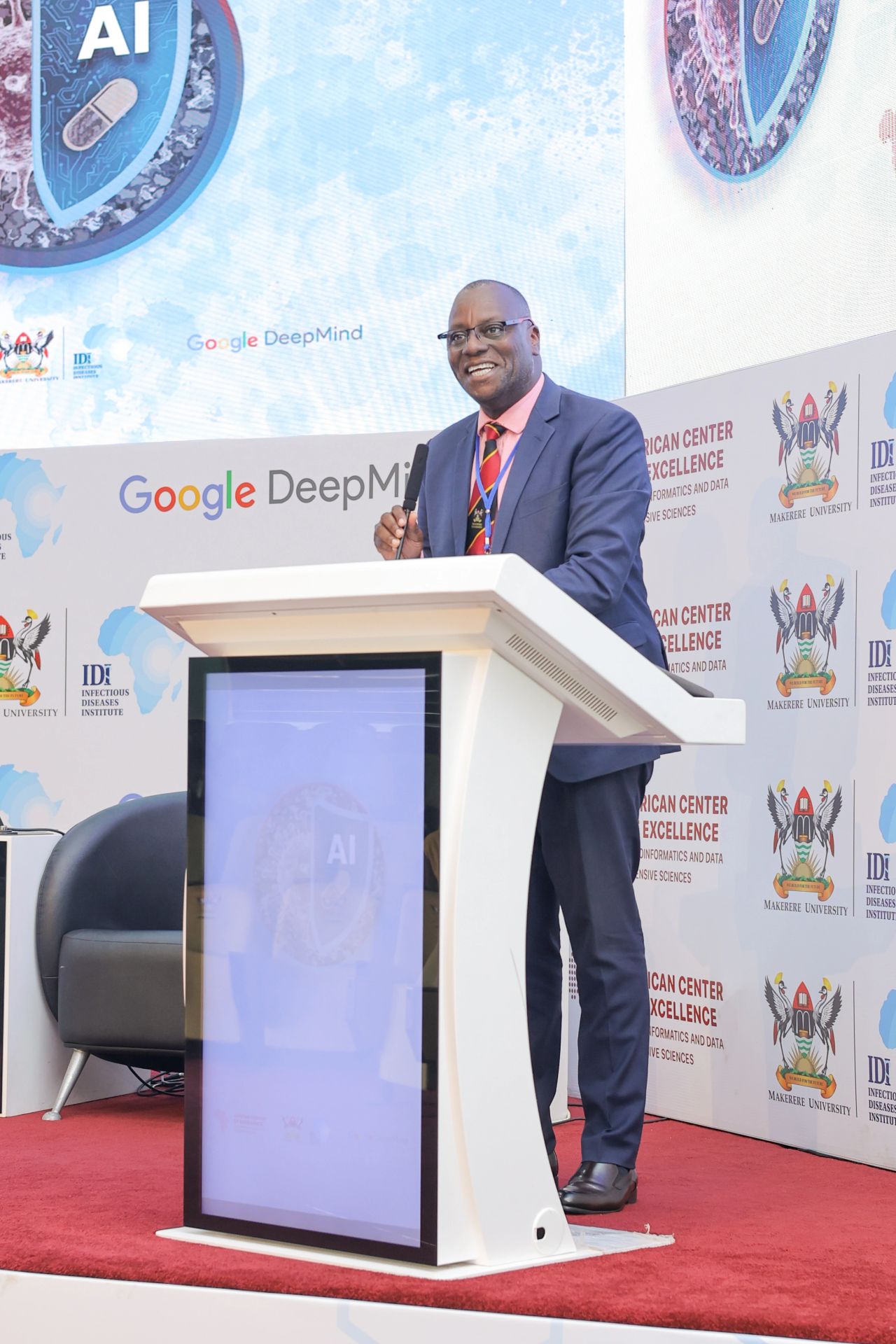
The consensus from Day 1 was clear. In the words of ACE-Uganda Director, Dr. Daudi Jjingo, alongside leadership from IDI and Makerere University, "AI is not just a tool; it is a necessity for sustainable health systems in Africa." The day opened with a powerful call to action, followed by Dr. Andrew Walakira walking delegates through the critical role of protein structural biology. By understanding the physical structure of resistance mechanisms, researchers can better train AI models to identify and neutralize emerging threats before they spread. Vivian Bazanye Twemanye and Khalifan Muwonge then addressed the backbone of all AI innovation: data. From exploring the current AMR data landscape in low- and middle-income countries to introducing the Uganda AMR Database, the message was unambiguous: locally relevant data drives global solutions. Africa cannot rely on external datasets that do not reflect local pathogen genetics and resistance patterns.
A vital panel featuring Dr. Hope Mackline, Dr. John Mukisa, and Assoc. Prof. Timothy Miles Rawson explored the intersection of technology and humanity, affirming that AI applications in precision medicine must be not only technically sound but also ethical, equitable, and aligned with national policy.
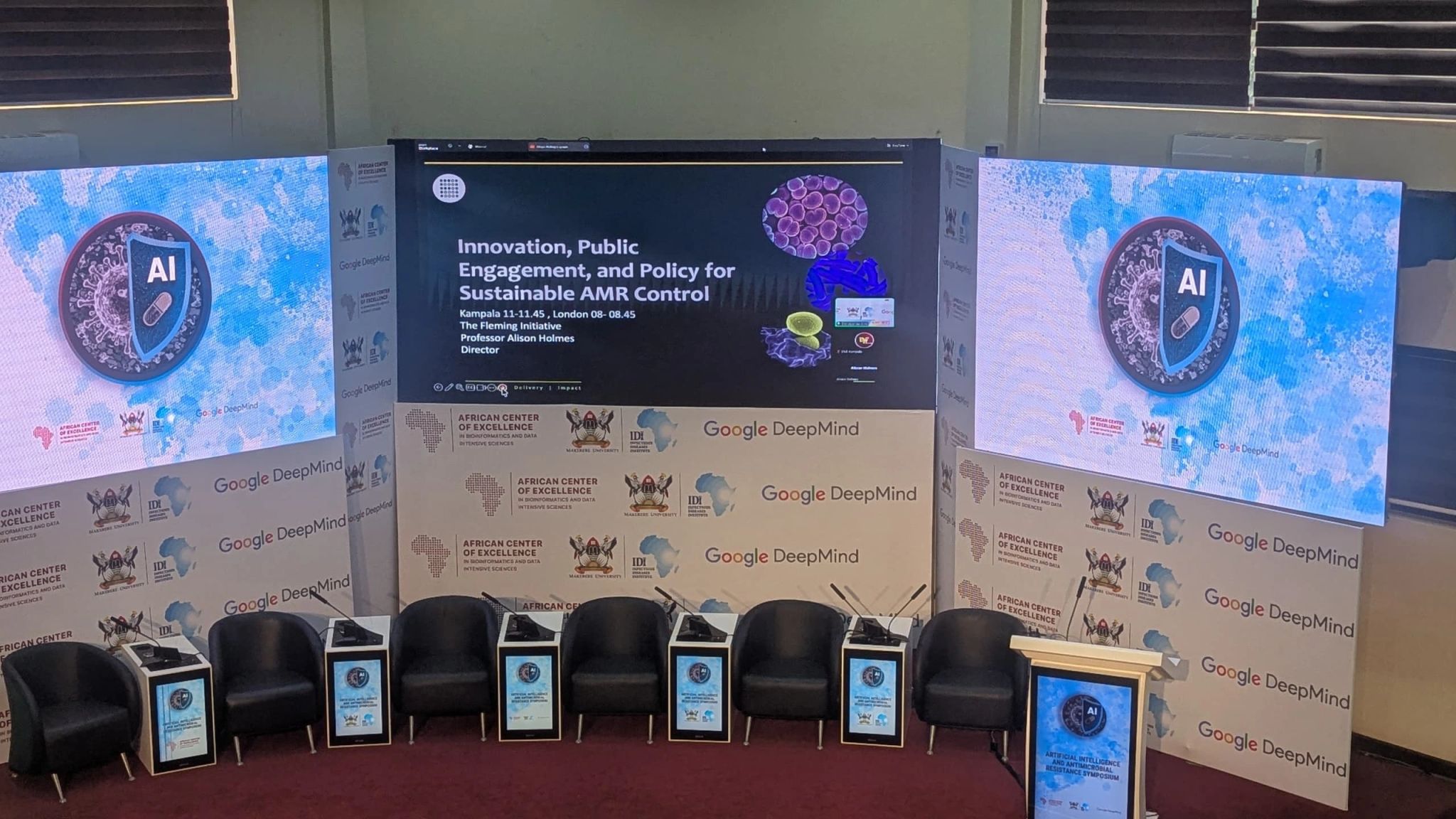
Day 2 featured a keynote presentation from Professor Alison Holmes, Director of The Fleming Initiative. Joining virtually, Professor Holmes delivered an insightful session titled "Innovation, Public Engagement, and Policy for Sustainable AMR Control." Delegates had the rare opportunity to hear directly from a global leader on how public engagement and smart policy must evolve alongside technological innovation to achieve lasting AMR control.
Among the researchers presenting their work was Alice Auko Owiti, an MSc student who shared her research on computationally guided modification of plant-derived antimicrobial peptides. In her own words: "I had the opportunity to share my work on computationally guided modification of plant-derived antimicrobial peptides; exploring how AI can help accelerate the discovery of new antibacterial agents. My approach combines structural bioinformatics methods, such as molecular docking, with experimental validation including cloning, expression, and peptide characterization. Beyond presenting, what stood out most were the conversations that followed. I received thoughtful questions and had engaging discussions that pushed me to think more critically about the broader impact and application of this work."
She added: "Grateful for the opportunity, the conversations, the connections, and the reminder that good science needs good communication. Looking forward to building on this and continuing these important discussions."
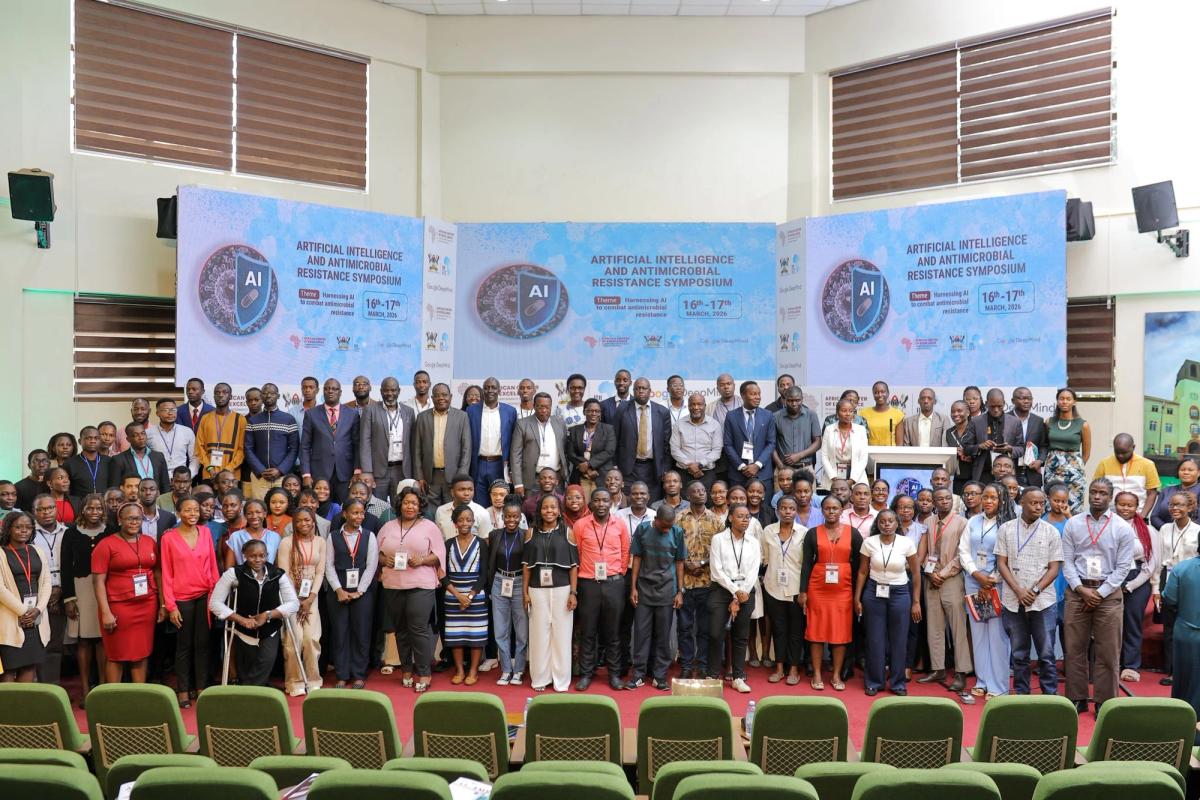
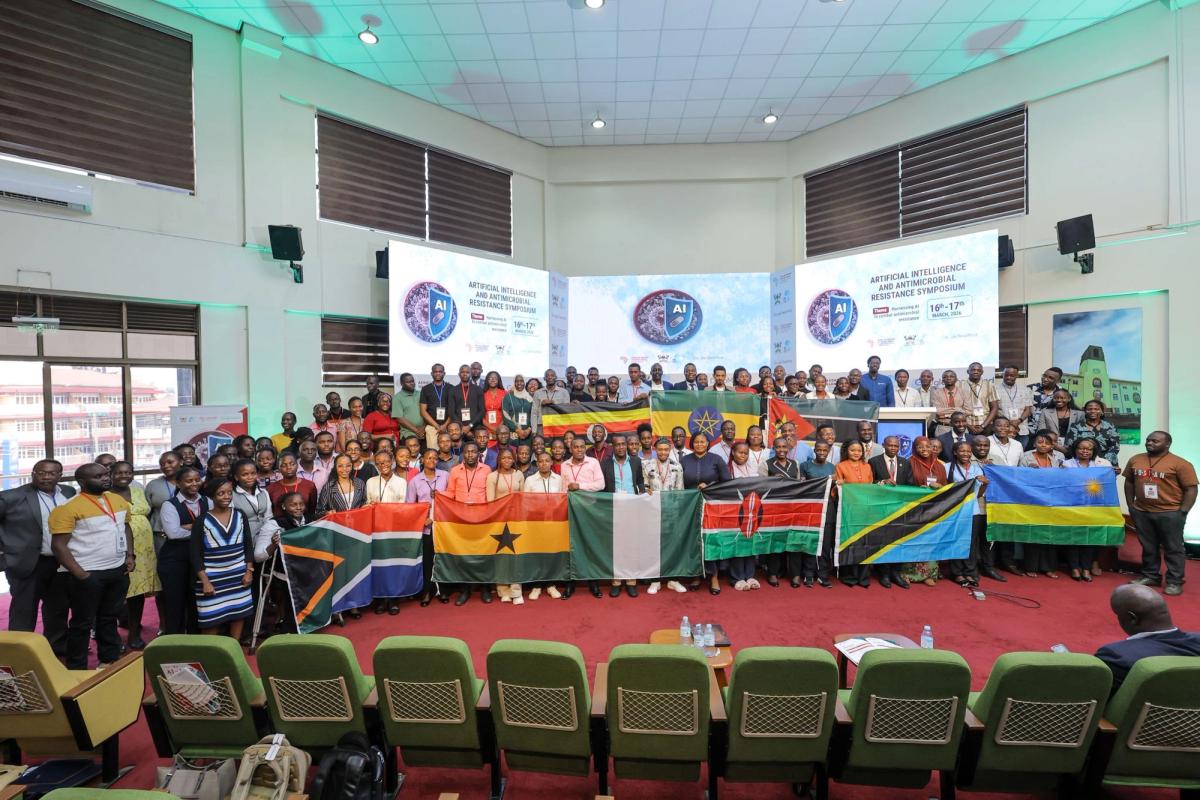
As AMR continues to threaten decades of medical progress, gatherings like this are not merely academic exercises. They are incubators for the tools, policies, and collaborations that will determine whether humanity stays ahead of drug-resistant infections. The AI & AMR Symposium 2026 demonstrated that Uganda, and Africa, are not waiting for solutions from elsewhere. By integrating AI with localized data, foundational science, and ethical foresight, ACE-Uganda and its partners are building the tools necessary to confront AMR head-on. The conversations have begun. The collaborations are forming. And the work continues.
Photos

Elizabeth Basemera
Communications Assistant
Elizabeth Basemera is a Communications professional at the African Centre of Excellence (ACE) in Bioinformatics and Data-Intensive Sciences. Here, she leads strategic communications, digital engagement, and science storytelling to promote the Centre's research, training programmes, and partnerships. Her work focuses on making complex scientific research accessible to diverse audiences while strengthening ACE's visibility and impact across Africa. She is passionate about effective storytelling and how it can strengthen research impact, foster collaboration and inspire the next generation.