From Learners to Leaders: SHEDS Fellows Return to the Front of the Classroom as Trainers.
Just a few months ago, they were sitting among the participants, learning the foundations of data science and bioinformatics. This week, they stood confidently at the front of the room, teaching others.
Just a few months ago, they were sitting among the participants, learning the foundations of data science and bioinformatics. This week, they stood confidently at the front of the room, teaching others.
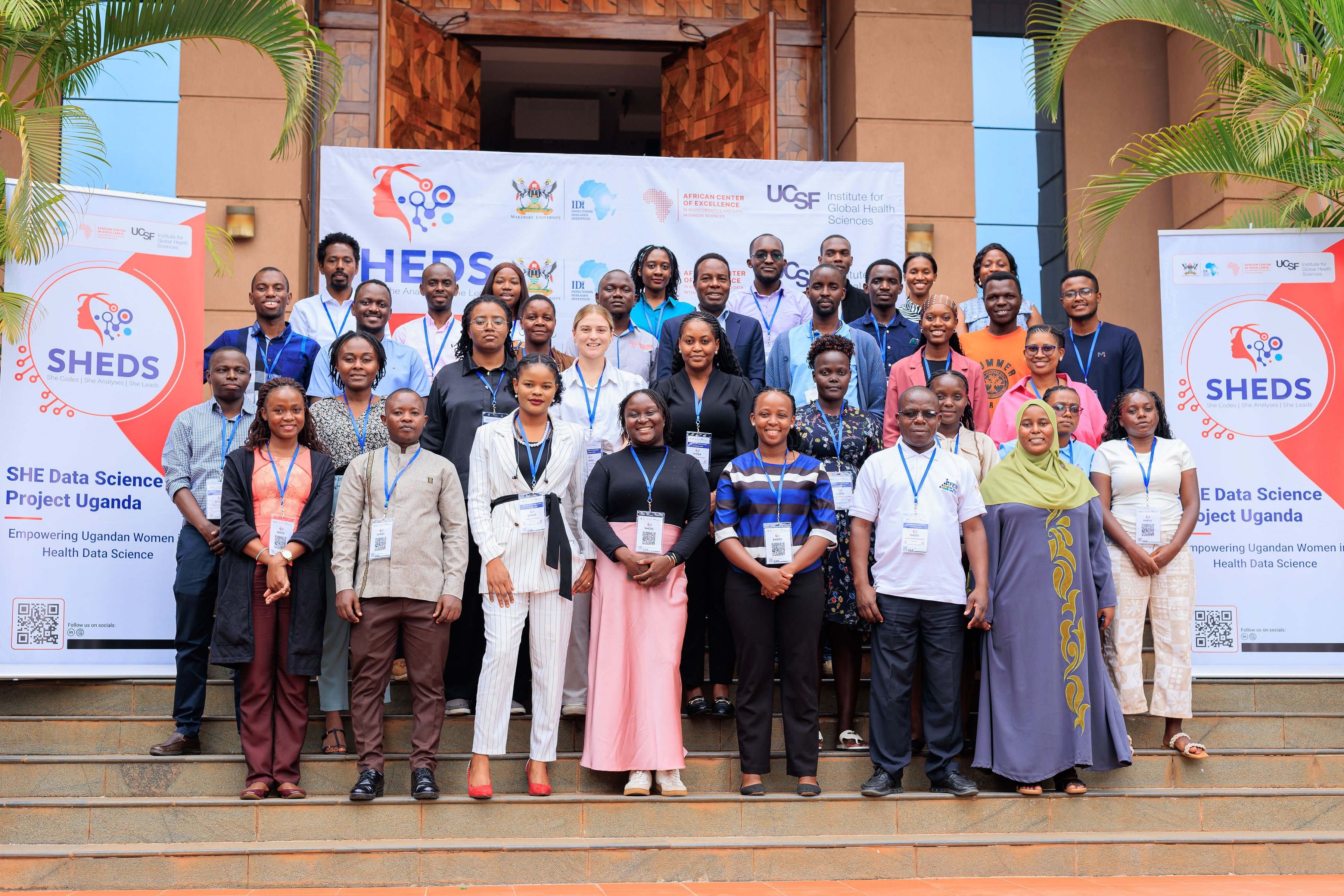
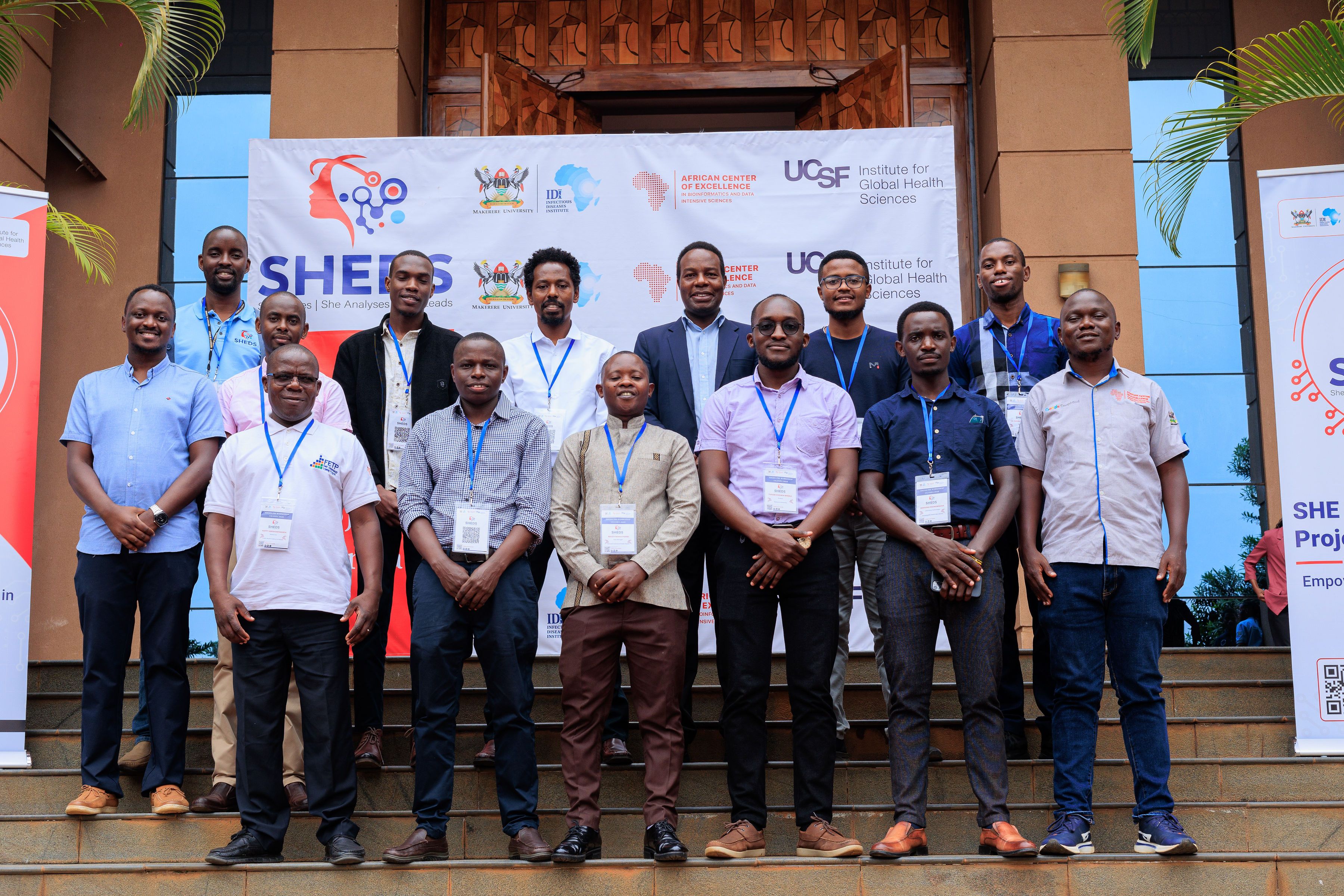
That transformation set the tone for the opening day of the SHEDS rtemis Workshop, held at the Tele-learning Centre at the Infectious Diseases Institute (IDI), Makerere University. More than a training on a new machine learning tool, the workshop became a powerful demonstration of what investing in scientists, particularly women, can achieve.
The two-day workshop, running from February 26–27, has brought together scientists, laboratory professionals, and public health practitioners from across Africa to learn rtemis, an intuitive machine learning and data visualization platform designed to make advanced analytics more accessible to researchers, even without extensive programming experience.
But it was the people leading the sessions who captured the attention of participants.
Gloria Nakabiri, Racheal Claire Kyomukama, and Magdalene Namuswe (all beneficiaries of the She Data Science (SHEDS) project) returned not as trainees, but as instructors. Having completed the same training themselves, they are now equipping fellow researchers with the skills needed to apply artificial intelligence and machine learning to real-world health challenges.
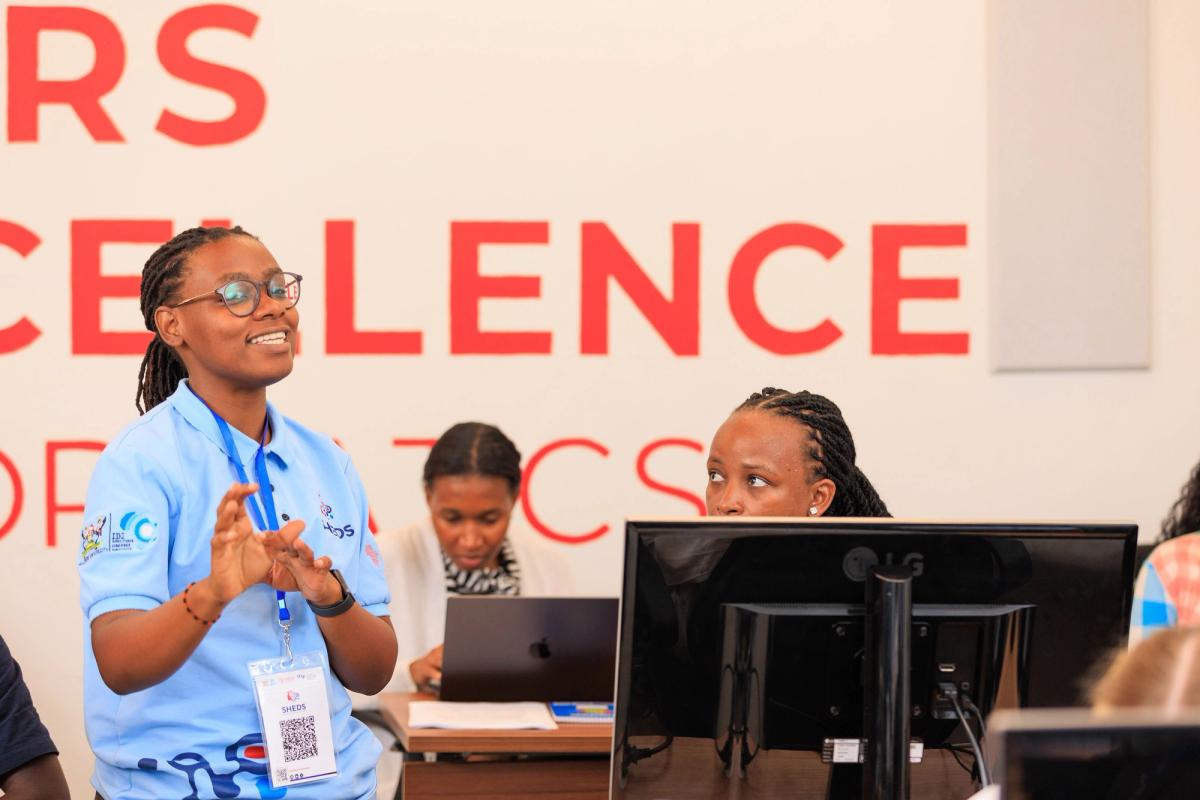
Racheal Claire Kyomukama presenting at the SHEDS rtemis workshop
Their journey reflects the vision behind SHEDS: building a sustainable channel of women who not only gain technical expertise but also become leaders capable of transferring knowledge to others.
Throughout the day, participants progressed from introductory concepts in data science and the R programming environment to exploratory data analysis before advancing into practical machine learning exercises using biomedical and clinical datasets. The sessions emphasized hands-on learning, allowing participants to experience how rtemis simplifies complex analytical workflows through interactive dashboards, no-code applications, and intuitive visualizations.
For many researchers working in laboratories and public health institutions, the platform offers a practical way to harness machine learning without the steep learning curve traditionally associated with advanced analytics.
The workshop also demonstrated a broader shift taking place within Africa's scientific community; one where local expertise is increasingly driving innovation. Instead of relying solely on external trainers, projects such as SHEDS are creating a multiplier effect, empowering today's learners to become tomorrow's mentors.
That approach resonated strongly throughout the room.
As discussions wrapped up on the first day, participants spoke not only about learning a new analytical tool but also about joining a growing network of scientists committed to applying data science and artificial intelligence to improve health outcomes across the continent.
The SHEDS rtemis Workshop is supported by the UCSF Institute for Global Health Sciences at the University of California, San Francisco, in collaboration with partners at METADSR. Together, the partners are helping build a new generation of African researchers equipped to lead the continent's growing data science and AI ecosystem: one workshop, and one scientist, at a time
Photos