Prof. Sir John Edmunds Visits ACE Uganda to Explore Innovations in Genomic Research.

Elizabeth Basemera
Communications Assistant
Researchers demonstrated cutting-edge work that is helping answer critical questions about infectious disease outbreaks from understanding how Ebola treatments could work across different virus strains to predicting future outbreaks before they occur.
The African Centre of Excellence in Bioinformatics and Data Intensive Sciences (ACE-Uganda) welcomed the United Kingdom's Chief Scientific Adviser at the Foreign, Commonwealth and Development Office (FCDO), Prof. Sir John Edmunds, for a visit that showcased how ACE scientists are utilizing computational science, genomics, and emerging technologies to strengthen epidemic preparedness.
During the visit, researchers demonstrated cutting-edge work that is helping answer critical questions about infectious disease outbreaks from understanding how Ebola treatments could work across different virus strains to predicting future outbreaks before they occur.
Among the highlights was a presentation by structural biologist Kevin Cissy Nabukeera, who shared research exploring whether therapeutics developed against the Zaire strain of the Ebola virus could also be effective against the Bundibugyo strain. Using genomic analysis and structural modelling, her team is generating evidence that could broaden treatment options during future Ebola outbreaks and improve preparedness across the region.
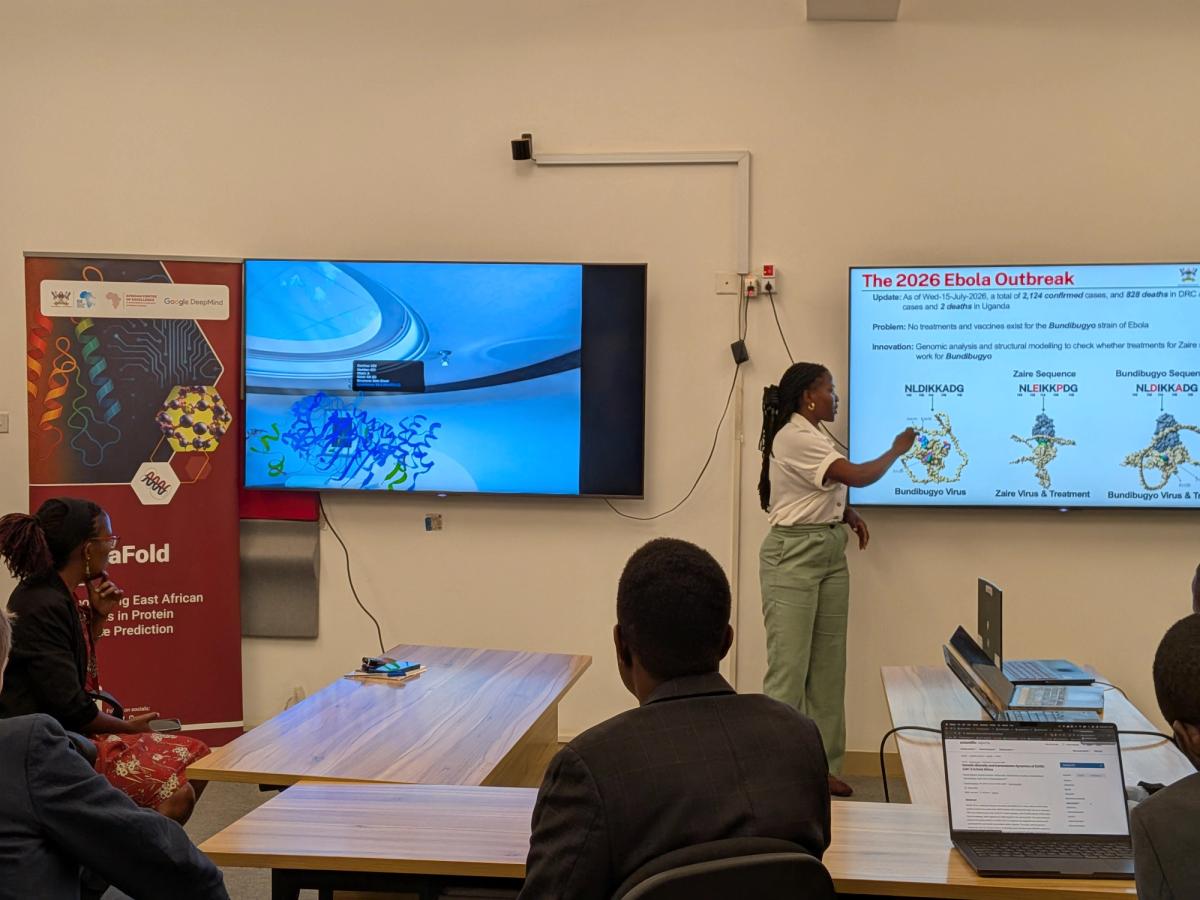
Kevin Cissy Nabukeera presenting how immersive 3D visualisation can examine protein structures with greater precision than traditional two-dimensional images allow.
Kevin's story is also one of growth and opportunity. She began her research journey as a fellow in the She Data Science (SHEDS) programme, an initiative designed to increase the participation of women in health data science. Today, she is contributing to internationally relevant research at the forefront of structural biology.
Prof. Edmunds also heard from Ritah Acktone Nagaba, whose team has developed mathematical models that predict the potential re-emergence of Ebola outbreaks. By identifying patterns that precede disease resurgence, the research offers valuable insights that could help public health authorities prepare for and respond more effectively to future epidemics.
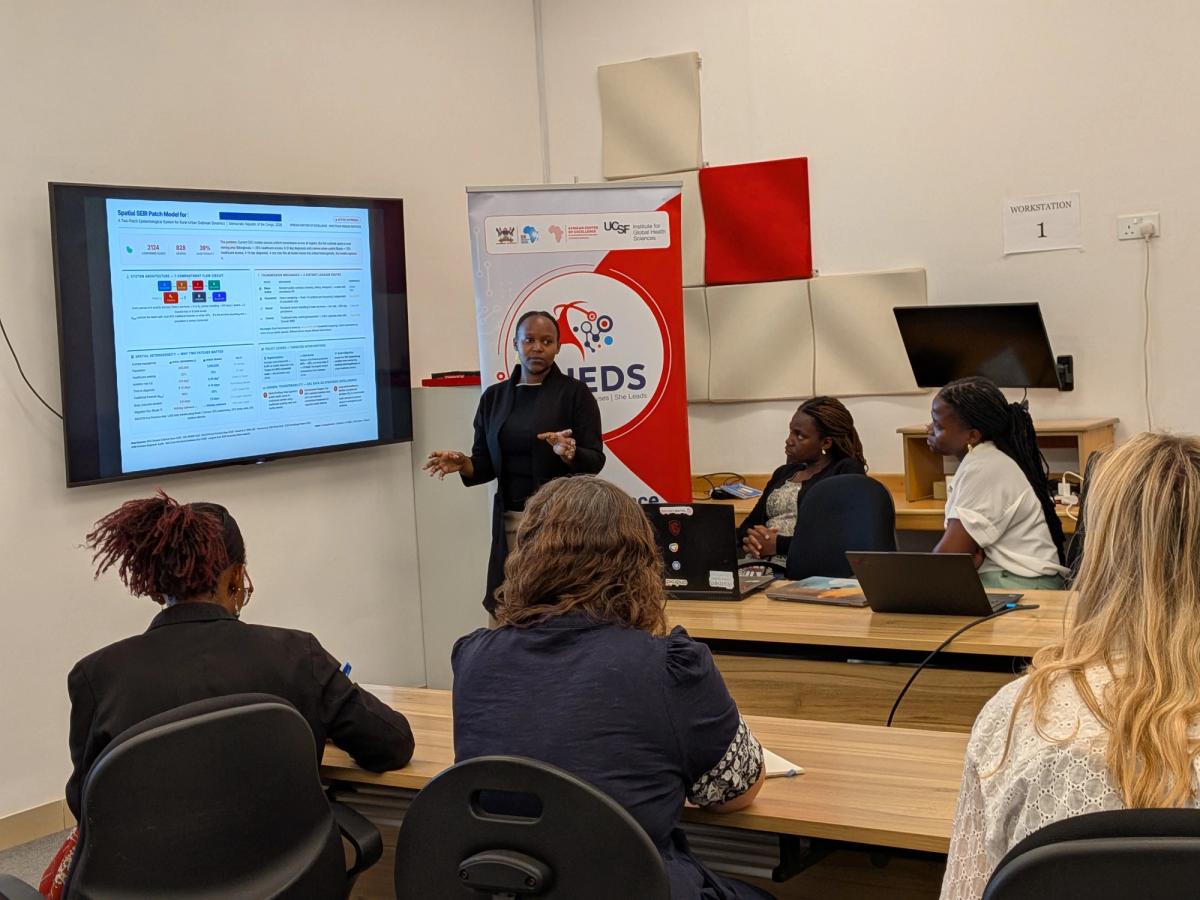
Ritah Acktone Nagaba, presenting her team mathematical model that predict the potential re-emergence of Ebola outbreaks.
Like Kevin, Ritah is a SHEDS alumna whose career has been shaped through mentorship, training, and hands-on research opportunities. She now serves as a research assistant, applying advanced computational methods to some of Africa's most pressing public health challenges.
The visit also featured a demonstration from ACE-Uganda's Virtual Reality team, which is transforming how scientists study proteins. Through immersive 3D visualisation, researchers can examine protein structures with greater precision than traditional two-dimensional images allow. The technology helps distinguish genuine antibody binding from visual overlaps that can occur in 2D representations, giving scientists greater confidence in interpreting molecular interactions and supporting drug and vaccine development.
Beyond the scientific demonstrations, the visit emphasized the importance of investing in people. The journeys of Kevin and Ritah illustrate how sustained investment in young scientists, particularly women, can translate into research leadership and innovation with global impact.
Speaking through the work presented, ACE-Uganda demonstrated its commitment to building scientific capacity that extends beyond laboratories. By equipping researchers with advanced computational tools, mentorship, and opportunities to tackle real-world health challenges, the Centre is contributing to stronger epidemic preparedness both in Uganda and across the continent.
Prof. Sir John Edmunds' visit reflects the growing international recognition of ACE-Uganda as a hub for data-driven health research and innovation. As partnerships between African institutions and global collaborators continue to grow, investments in local scientific talent and cutting-edge technologies will remain essential to addressing future public health threats.
ACE-Uganda expressed its appreciation to Prof. Sir John Edmunds and the Foreign, Commonwealth and Development Office for the visit and their continued engagement in supporting scientific research and innovation in Africa.

Elizabeth Basemera
Communications Assistant
Elizabeth Basemera is a Communications professional at the African Centre of Excellence (ACE) in Bioinformatics and Data-Intensive Sciences. Here, she leads strategic communications, digital engagement, and science storytelling to promote the Centre's research, training programmes, and partnerships. Her work focuses on making complex scientific research accessible to diverse audiences while strengthening ACE's visibility and impact across Africa. She is passionate about effective storytelling and how it can strengthen research impact, foster collaboration and inspire the next generation.