ACE Visualization Lab
See the future. Simulate the impossible. Solve real problems.
Dynamic 3D visualization has become a critical component of modern science, education, and healthcare. Whether it's for medical training, biomedical research, surgical planning, psychological therapy, or collaborative 3D conferencing, complex information is better understood and applied when it is visualized.
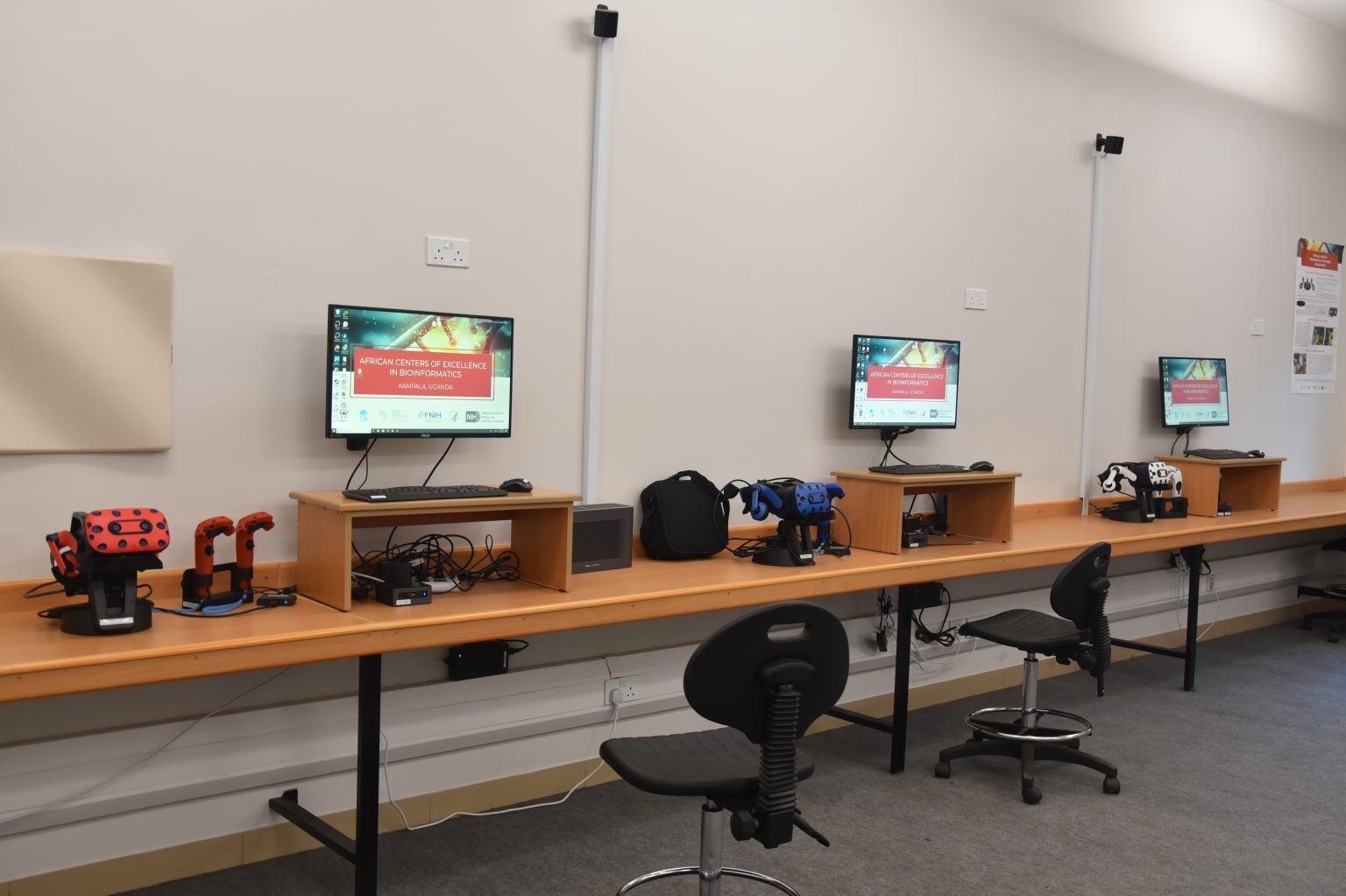
The Virtual Reality (VR) Lab at the African Center of Excellence (ACE) in Bioinformatics and Data Intensive Sciences was established to meet this need. It is the only facility of its kind in Uganda.
Unlike standard computer laboratories, the ACE VR Lab is equipped with GPU-backed workstations and is directly connected to the Center's High-Performance Computing (HPC) cluster. This integration of cutting-edge software, powerful local hardware, and supercomputing backend provides researchers, trainees, and partners with unprecedented dynamic visualization and simulation capacity.
Visualization in an HPC Environment
Modern cutting-edge visualization requires the right combination of advanced software and hardware. However, local workstations alone are insufficient for processing and rendering large-scale, complex datasets. By connecting visualization directly to a High-Performance Computing environment, the ACE VR Lab enables capabilities that would otherwise be impossible:
The capabilities of the VR Lab are as follows:
- Real-time rendering of massive datasets: Visualize entire genomes, population models, or complex protein structures without processing delays
- GPU-accelerated simulation: Run molecular dynamics, fluid dynamics, or epidemiological models while viewing them interactively
- Remote high-end visualization: Researchers can run complex visualizations on the HPC and stream results to the VR lab or remote locations
- Multi-user collaborative simulation: Multiple researchers in different locations can interact with the same 3D model simultaneously
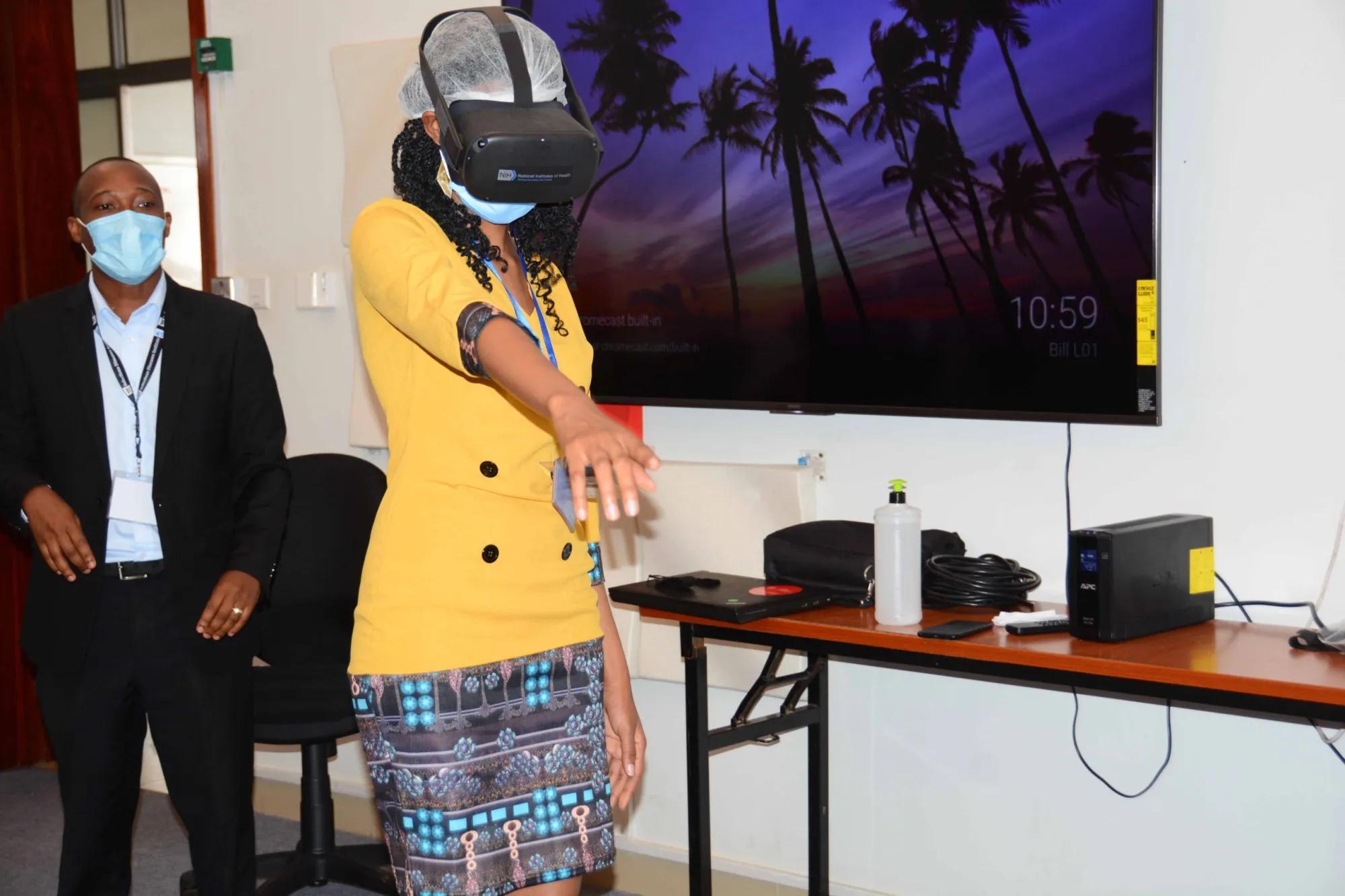
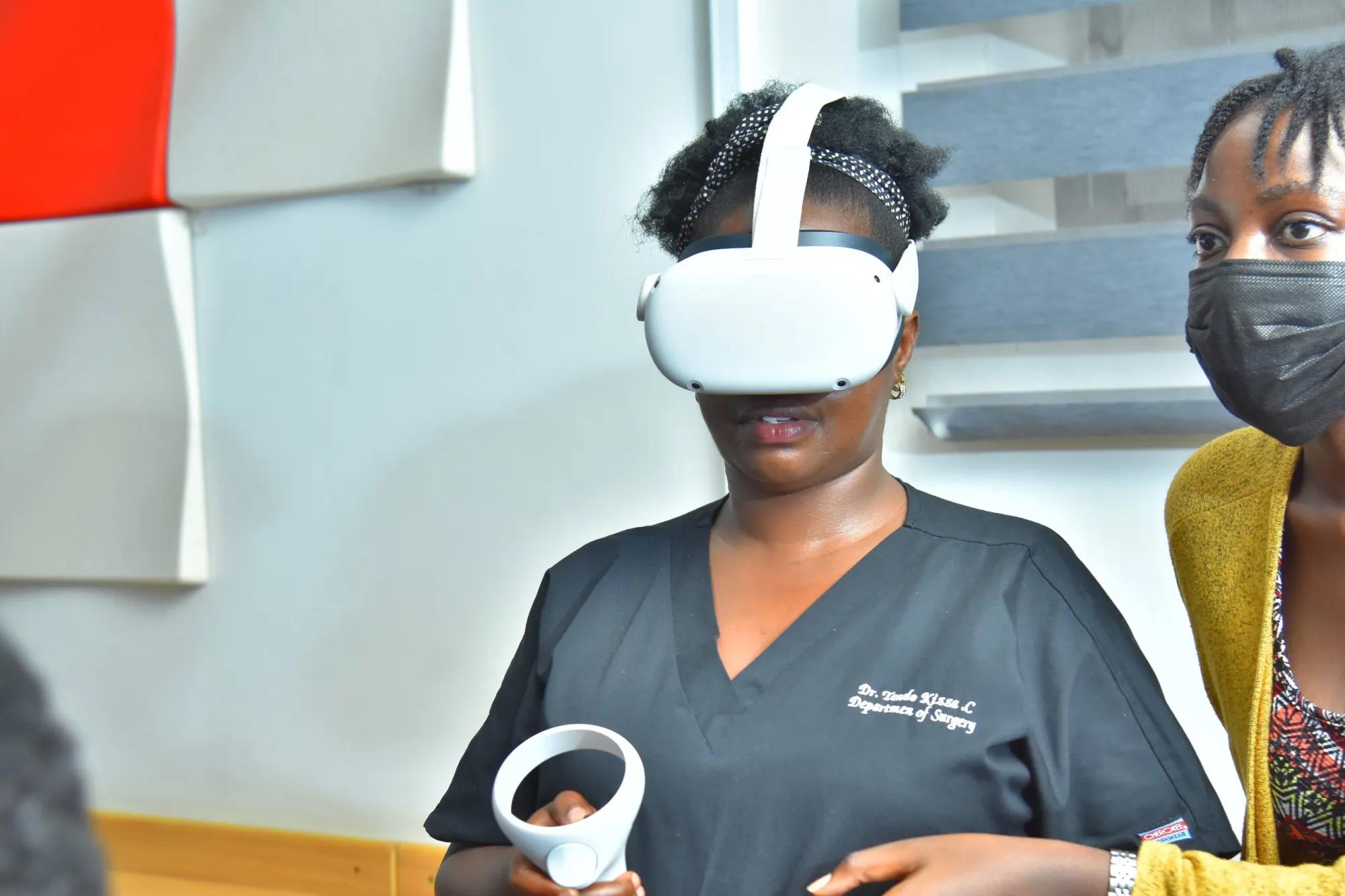
- Large-scale training delivery: Health workers can practice pandemic response, emergency procedures, or surgical techniques in a risk-free virtual environment
In a standard computing environment, a researcher visualizing a 3D protein structure might wait hours for a laptop to render a single view. In the ACE VR lab, that same researcher can interact with the model in real time; rotating, zooming into atomic-level structures, and running simulations- all powered by the HPC in the background.
Gallery
Specifications
- VR Headsets (includes wireless and wired sets)
- 10
- Workstations
- 5
- HPC Connection
- Direct integration with ACE's 320-core, 1.25 TB RAM HPC cluster
- Software Platforms
- VRMerge, AlphaFold and Infection Prevention and Control(IPC)
- Network
- High-bandwidth connectivity via Research Education Network Uganda (RENU)
What you can do here
- Biomedical Visualization
- Medical Training
- Public Health Simulation
- Remote Collaboration
- Education & Training
Get in Touch
This facility is available to ACE students, researchers, and approved collaborators.
Request Access